

Quick answer
Al Ain is famous for its UNESCO-listed Cultural Sites, which include six components: the oasis districts with traditional falaj irrigation, Bronze Age tombs at Jebel Hafit, Iron Age settlements at Hili and Bidaa Bint Saud, and defensive structures like Al Jahili Fort. The city preserves the Gulf's oldest evidence of permanent human settlement, dating to 2500 BCE, alongside functioning date palm groves that use 3,000-year-old water channels.
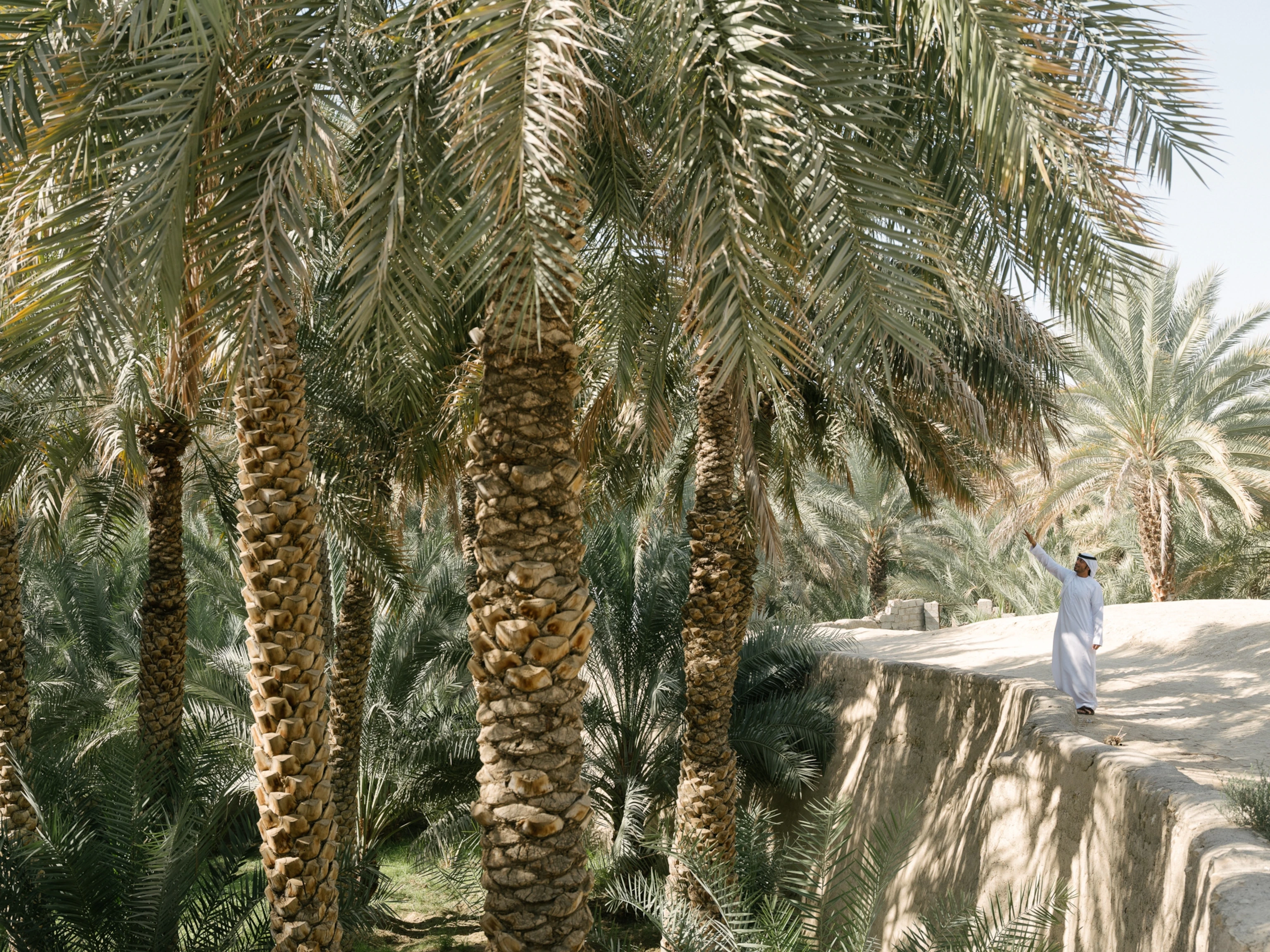
Al Ain Oasis remains the largest of the emirate's eight traditional palm groves, sheltering 147,000 date palms beneath a canopy that drops ground temperatures by seven degrees Celsius. The falaj irrigation network threading through the oasis pathways predates Islam, engineered to distribute groundwater from the Hajar Mountains through precisely graded channels that require no pumps. Visitors walk shaded trails where the same hydraulic logic has governed agriculture since the Iron Age. The Bronze Age necropolis at Jebel Hafit places Al Ain on the archaeological map as the Gulf's most complete record of Umm al-Nar culture. Five hundred beehive tombs built from precisely cut limestone blocks occupy the mountain's eastern flank, each originally housing collective burials with copper weapons and Mesopotamian pottery. Excavations in the 1960s and 1970s established the tombs' date to 2500-2000 BCE, revealing trade links that stretched from the Indus Valley to Dilmun. The Hili Grand Tomb, restored in the 1970s, displays the carved reliefs of oryx and human figures that mark the culture's artistic signature. What is al ain famous for beyond its ancient past finds an answer in its role as a 20th-century political center. Al Jahili Fort, built in the 1890s to protect the palm groves and the ruling family's summer residence, became the garrison for the Trucial Oman Scouts in the 1950s. The fort's restoration in 2008 converted its courtyards into exhibition space for Wilfred Thesiger's photography, documenting Bedouin life before oil wealth transformed the region. Qasr Al Muwaiji, birthplace of Sheikh Khalifa bin Zayed, opened as a museum in 2015, detailing the city's evolution from caravan stop to modern administrative hub. The Al Ain heritage attractions operate within a compact geography. All six UNESCO components sit within 20 kilometers of the central oasis, connected by the Ring Road that encircles the city's original settlements. The concentration allows a single day to cover the necropolis overlook, a fort interior, and an oasis walk, though the scale of the palm groves rewards slower exploration. Free admission to the main oasis pathways removes a barrier; the shade and irrigation channels offer practical relief from the desert climate that shaped everything visitors see.
“The falaj channels threading Al Ain Oasis have distributed mountain groundwater without mechanical pumps for three millennia.”
What Is Al Ain Famous For: Operating Hours
The main public oasis site in Al Ain remains open to visitors seven days a week.
| Monday | 08:00–17:00 | |
|---|---|---|
| Tuesday | 08:00–17:00 | |
| Wednesday | 08:00–17:00 | |
| Thursday | 08:00–17:00 | |
| Friday | 08:00–17:00 | |
| Saturday | 08:00–17:00 | |
| Sunday | 08:00–17:00 |
Best Time to Visit to See What Is Al Ain Famous For
The best time to visit Al Ain is during the early morning hours, specifically between 08:00 and 10:00, to avoid the peak intensity of the desert sun. This window allows visitors to experience the landscape in comfortable temperatures while enjoying the natural shade provided by the date palm groves.
November to March
Moderate to highMild temperatures, 20°C to 28°C
This is the peak season for outdoor activities when the weather is most pleasant for walking through the oasis.
April and October
Low to moderateWarm to hot, 30°C to 38°C
These shoulder months offer fewer crowds but require careful planning to avoid the heat of the afternoon.
Weekday mornings
Minimal—
Visiting between 08:00 and 10:00 on weekdays ensures a quiet environment and significantly cooler conditions than mid-day.
Verdict: The optimal time for a visit is between 08:00 and 10:00 on a weekday during the cooler months of November through March.
Logistics: How to Reach What Is Al Ain Famous For
Al Ain is located in the eastern region of the Abu Dhabi emirate. The city is most easily accessed by road via the E22 or E66 highways.
E22 highway from Abu Dhabi
E66 highway from Dubai
E201 from Al Ghubaiba Bus Station, Dubai
Intercity taxi service
Check availability
Frequently Asked Questions About What Is Al Ain Famous For
Everything you need to know about what is al ain famous for